Advertisement
spacer.png, 0 kB
KMFDM's Sascha Konietzko Part 1
Written by Christina Cooper   
Tuesday, 28 August 2007
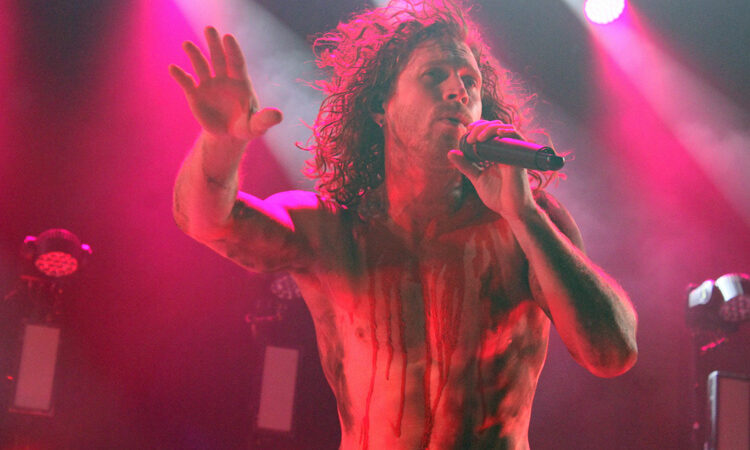
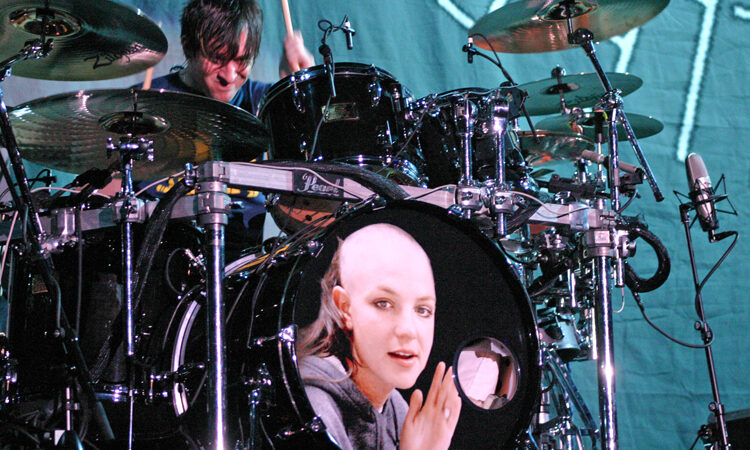
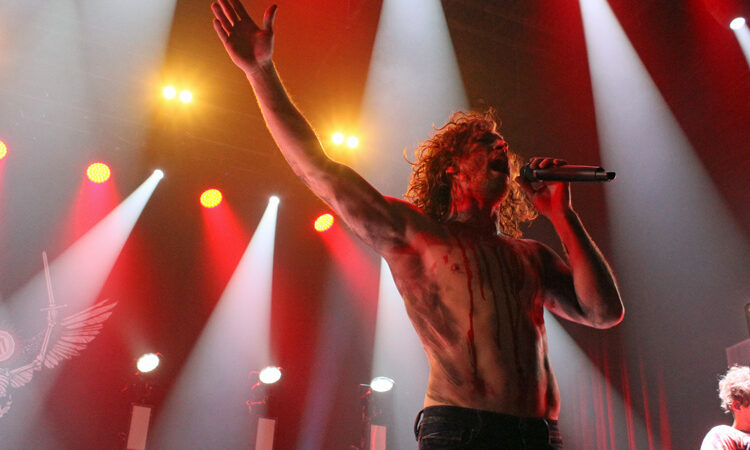
Tim Lawler, interviews, Sacha Konietzko of KMFDM on Thursday, August 23, about the new CD, "Tohuvabouhu" and all things KMFDM.

Interview with Sascha Konietzko of KMFDM

Thursday, August 23, 2007

Interview by Tim Lawler

<!--[if !supportEmptyParas]--> <!--[endif]-->

Tim: Well, I just want to say that I have listened to the album quite a few times and I love it. It’s an awesome album!

<!--[if !supportEmptyParas]--> <!--[endif]-->

Sascha: Good, good, aren’t you on it?

<!--[if !supportEmptyParas]--> <!--[endif]-->

Tim: Yes, I’m the first one on “Superpower”. (Sascha laughs)

<!--[if !supportEmptyParas]--> <!--[endif]-->

Sascha: So basically, you open up.

<!--[if !supportEmptyParas]--> <!--[endif]-->

Tim: Yes, and that was very awesome to hear that!

<!--[if !supportEmptyParas]--> <!--[endif]-->

Sascha: That one screamed for it didn’t it.

<!--[if !supportEmptyParas]--> <!--[endif]-->

Tim: Yes it did. (Sascha laughing) For some reason, that’s my favorite track!

<!--[if !supportEmptyParas]--> <!--[endif]-->

Sascha: Well, I’m not surprised.

<!--[if !supportEmptyParas]--> <!--[endif]-->

Tim: So earlier this year when you guys set up the phone line and asked the fans to leave a message telling you “What does KMFDM do for you?” Was it always your intention to include these in a song or was it let’s set this up and see what we come up with?

<!--[if !supportEmptyParas]--> <!--[endif]-->

Sascha: No, the whole idea was to basically make a song around whatever we get and I had the feeling that we would get good stuff. And I was working on this track that was kind of not going anywhere. It needed something to make sense and I figured maybe something like that would make sense. And it did.

<!--[if !supportEmptyParas]--> <!--[endif]-->

Tim: Cool, was the selection process hard, did you find it difficult to choose what to put in the song.

<!--[if !supportEmptyParas]--> <!--[endif]-->

Sascha: No, I mean once you have a concept it’s pretty damn easy. It’s pretty straightforward at that point. You know, sometimes it just takes a little while to get around to it.

<!--[if !supportEmptyParas]--> <!--[endif]-->

Tim: Now, with this album, to me it sounds a bit retro at times while still remaining fresh. Was this intentional or did you run into any issues while taking this approach or was it more of an organic sort of thing.

<!--[if !supportEmptyParas]--> <!--[endif]-->

Sascha: No, there were no issues at all. And I’m not really sure what sounds retro about it. I’ve heard that a couple of times now. What do you feel sounds retro?

<!--[if !supportEmptyParas]--> <!--[endif]-->

Tim: Well, in the beginning your music  had a lot more of an electronic sound to it and then you guys progressed into a more guitar driven sound but with this album it sounds like you kind of returned to more of the electronic aspect of it or rather maybe a melding of the two.

<!--[if !supportEmptyParas]--> <!--[endif]-->

Sascha: You mean it sounds retro within KMFDM sort of boundaries.

<!--[if !supportEmptyParas]--> <!--[endif]-->

Tim: Right.

<!--[if !supportEmptyParas]--> <!--[endif]-->

Sascha: OK, yeah. I can see that. I mean I said it was going to be way more electronic. And well, it is! What was interesting about it though was there was something that went very different than on all the previous albums we’ve done in this particular lineup. And that’s you know, rather than just sort of working, plotting along slowly track by track, you know the next step on this track Andy needs to record drums, blah, blah, blah. On this album it was more like we set up in teams of two, a maximum of three people and did songs, you know in splinter groups. So you have your Sascha/Lucia songs, you have your Jules and Sascha songs and Andy and Lucia songs, etc., etc.  So, nothing is like you know, there’s no song where everybody really per say worked on. I mean obviously there are songs where everybody did a little bit of something. It’s not like in the past, it’s somehow very different.

<!--[if !supportEmptyParas]--> <!--[endif]-->

Tim: Being a long time fan, I’ve listened to all your albums pretty extensively and in my opinion feel as if this album could be your best album yet. Do you feel the same way?

<!--[if !supportEmptyParas]--> <!--[endif]-->

Sascha: Yeah, I think it is. I mean I always think that about the newest stuff.  I mean for me it’s very hard to be the judge on what I’m doing. All I can really say is if I like it or not. And this I particularly like a lot.

<!--[if !supportEmptyParas]--> <!--[endif]-->

Tim: So you don’t particularly have any one album that stands out more for you than the rest?

<!--[if !supportEmptyParas]--> <!--[endif]-->

Sascha: No, No, I have tracks, there are tracks that I love throughout the years but I think albums are a weird thing. Their like a bit of a two edged sword on one hand. You know, it’s nothing more than a showcase of what it is you were doing at that time. On the other there are influences or their can be things that influence an album in certain ways. And that can be something that went down while it was made. It could be a memory of something particular, you know stressful, or unpleasant or whatever. I mean theirs albums I don’t mind too much listening to and theirs albums I just don’t want to listen to a lot because they just bring up memories that I just don’t like.

<!--[if !supportEmptyParas]--> <!--[endif]-->

Tim: What are some of the tracks that stand out for you, ones that you particularly like to perform on tour?

<!--[if !supportEmptyParas]--> <!--[endif]-->

Sascha: Well, I really love to do “Son of a Gun”. I’m always very fond of “Megalo”, “Drug Against War”. You know, it’s kind of funny. I’m very particular to songs that I wrote. For some reason that may seem very normal but it’s for me to have an organic feel. For instance, if I’m performing songs like “Flesh” or “Juke Joint Jezebel”. They don’t have my syntax. They have someone else’s kind of ideas and it’s not very organic for me, it doesn’t feel right and organic to perform them. You know what I mean? It’s kind of you know, if I came up with something I know how to do it.

<!--[if !supportEmptyParas]--> <!--[endif]-->

Tim: It has more meaning if it’s something you created yourself.

<!--[if !supportEmptyParas]--> <!--[endif]-->

Sascha: Yeah, plus other people’s lyrics often times to me are just heh? And I’m sure it’s vice versa too. I’m sure if someone were to perform my tracks they would go, what the hell is he thinking? I would say in general it’s basically the stuff that I came up with that sticks with me the most.

<!--[if !supportEmptyParas]--> <!--[endif]-->

Tim: You mentioned that everybody kind of added their own bits and pieces to this album in creating it. Is this something new?

<!--[if !supportEmptyParas]--> <!--[endif]-->

Sascha: No, No, that would be the wrong way to put it. That’s exactly how it always went. You know everybody added their bits and pieces but this time around, literally, our drummer Andy, sat himself down and wrote a track. Gave it to Lucia and she sang on it, boom! And they gave it to me, and I mixed it and it was done. So I really had not much to do with that one. But meanwhile, I was working on other shit. So it kind of created a momentum and stuff was popping up out of nowhere left and right. It was really good.

<!--[if !supportEmptyParas]--> <!--[endif]-->

Tim: So there’s not really one person that writes just the lyrics and one person that tends to do the music, that sort of thing.

<!--[if !supportEmptyParas]--> <!--[endif]-->

Sascha: Well, by designation, Lucia and I are always the writers of the lyrics. But musically, it used to be that either Jules or I would come up with something that we would then build on and Andy would do his part on it and then Steve would do his part on it. On this record, there are very few songs with actually real drums just because of the way we worked.

<!--[if !supportEmptyParas]--> <!--[endif]-->

Tim: Through the years, KMFDM has undergone numerous lineup changes with you being the only constant. Do you regret that some of those people aren’t part of KMFDM today? And do you still keep in touch with any of them?

<!--[if !supportEmptyParas]--> <!--[endif]-->

Sascha: No, actually no to both questions. I’m not regretting anything. I think everything had it’s time and it’s place and no I’m not in contact with them because it’s a mutual choice to not be in contact, I suppose.

<!--[if !supportEmptyParas]--> <!--[endif]-->

Tim: Now with the creation of the mp3 and downloadable music, you guys have been offering a lot of your music to download via your store. Some of the time, that includes remixed tracks, whereas in he past you were known for doing multiple singles per album with multiple remixes and B-sides. Are the days of the album single over?

<!--[if !supportEmptyParas]--> <!--[endif]-->

Sascha:  Yeah, it’s a format you will hardly find in the record shops anymore. It’s a format that’s really only viable for Top 40 artists really. The single is limited because it has a certain retail price. The royalties that it’s generating are very low due to the retail price and most shops just don’t stock anything anymore that they don’t know is going to sell right away. You know you go to Best Buy and you have one copy of KMFDM, of the new album, they sell it and then they reorder it and three weeks later they have the next one copy on the shelf. It’s just the way it goes. It was very inevitable that it would come this way but it was also very clear. Even ten years ago, it was the course that this business would take. I wrote this essay back in 97’ about the hypothesis of what will really happen if the mp3 becomes the breakthrough standard format. Back then I could easily foresee that record labels will go under left and right, and that the ones that would remain would be very cautious with spending money into developing their acts and even more cautious in spending money on developing new acts. And that this was basically the death nail for the CD. But nowadays, boom, your shit comes out before you even want it to be out, just because someone got one that feels free to post it all over the net. It’s just a bit of a shambles right now.

<!--[if !supportEmptyParas]--> <!--[endif]-->

Tim: During the whole Columbine media circus, KMFDM was named and some of your lyrics were said to have been posted on a website and were supposedly a catalyst to the shooters. One of your responses to that incident was the MDFMK track “Witch Hunt”. With all that in mind and how the media put a spin on things has that all changed how you write lyrics, what the lyrics are about and has it had any long term effects on you as a musician?

<!--[if !supportEmptyParas]--> <!--[endif]-->

Sascha:  Well, it has had a long term effect, for sure, because KMFDM has ever since been stigmatized as far as name recognition and that stuff goes.  It has not changed the approach lyrically at all I would say and you know a shit storm needs to be recognized as exactly what it is, a shit storm. So to me it was very clear at that moment. Like with everything, the media loves to get their hands on a story, its breaking news and this and that and then they just basically fuck it all up and nothing ever gets answered. Their’s just a lot of casualties in the paths of this stuff. To me, it wasn't, not even for one second worth to go out and quote unquote defend myself. I would not agree with what you said that it was a catalyst or believed to be a catalyst. The fact is, Eric Harris and Dylan Klebold, they had a website. I think Eric Harris had it and on it he had a bit of a manifesto put together out of lines taken from various and numerous KMFDM songs. He lived probably in his own little violent fantasy world. That's pretty much all I can say, the guy was on our mailing list and he ordered from the shop. Supposedly he was wearing a KMFDM hat while the whole thing was going down. So yeah, it's pretty fucked!


Tim:
I agree.


Tim: Now, after having worked with so many other musicians as part of KMFDM. Do you feel as if the current lineup is a more cohesive version of KMFDM than it has been in the past? And if so, why do you think that is?


Sascha: Well, their are a number of reasons why I do think that way. One is, this is for the first time a lineup that is not volatile. It is a stable lineup and so far as I know, I can trust the people that I'm working with. They would go through the fire for me and I would go through the fire for them and in fact, we do all the time. Its felt often times to me that I was always the guy that put things together, made shit happen and scrounged together budgets and created opportunities for people, including myself. And then kind of got stepped upon a bit and used a bit, sort of as a jumping board so to speak. I just don't have that feeling now. You can think about that kind of stuff any way you want, but if you become the doormat for a bunch of people then after a while it stops being interesting or fun.


Tim: So when you started KMFDM, did you have an idea of what you wanted the band to be and if so, did you achieve that?


Sascha: Not at all, KMFDM really started as you may know, not even as a band concept. It was just a musical audio accompaniment to some art exhibits. It was really, really far from being a band, and then at some point I met this guy from New York, Peter Missing, who was living in Hamburg back in 85'. He wanted me to put a band together so that he could play a gig. He had some sort of reputation as the front man for some project; I don't even know what they were called at the time. Jokingly, I came up with the name "Missing Foundations". I recruited a bunch of my buddies from Hamburg and we put together a band and then the drummer kind of fell out and we needed a new drummer. That's when En Esch came in. He was moving into an apartment that I had just moved out and as we were handing the keys over to the new tenant they said it's not only just us two girls moving in but there's also  a guy coming in a couple of weeks and he's a drummer. Good, I just need a drummer, let's hire him. I basically hired him without ever having met him. We did this project "Missing Foundations" and then stuck around. The project was pretty short lived but we got along pretty well, he and I. We just started to do things and in need of some sort of name for whatever it was we were doing, I just said why don't we call it a name I was doing shit under for the past two years. Why don't we just shorten it down to KMFDM "Kein Mehrheit Für Die Mitleid" into KMFDM and see what happens. Then we met Raymond Watts and then we started recording as a band for the first time. That was in 1986. I did KMFDM for two years as sort of a solo side project with very few ambitions to be a band. So I had no idea what I ever wanted, and once we started as a band outfit, it was really a big piss take. Completely not serious and just making stuff that we thought was good and funny.


Tim:
Now that you're more of an established band, is their anything specific that you hope to achieve with KMFDM that you haven't already?


Sascha: Not at all, I'm really enjoying what I'm doing. I love to make music and the people that I have in mind with are basically myself and my friends. I never have the ambition to become like a main stream artist or something like that or have KMFDM be in a chart position or sell a platinum album. I've got a fuckin' collection of platinum albums on the wall here. (Laughing)


< Prev   Next >
spacer.png, 0 kB
spacer.png, 0 kB
©2006 REVENANT MEDIA. All Rights Reserved.  
i-shout | hmp birmingham | 2006 New Movies | online poker | Ads
Free Relevant Links | Exchange Catalog